
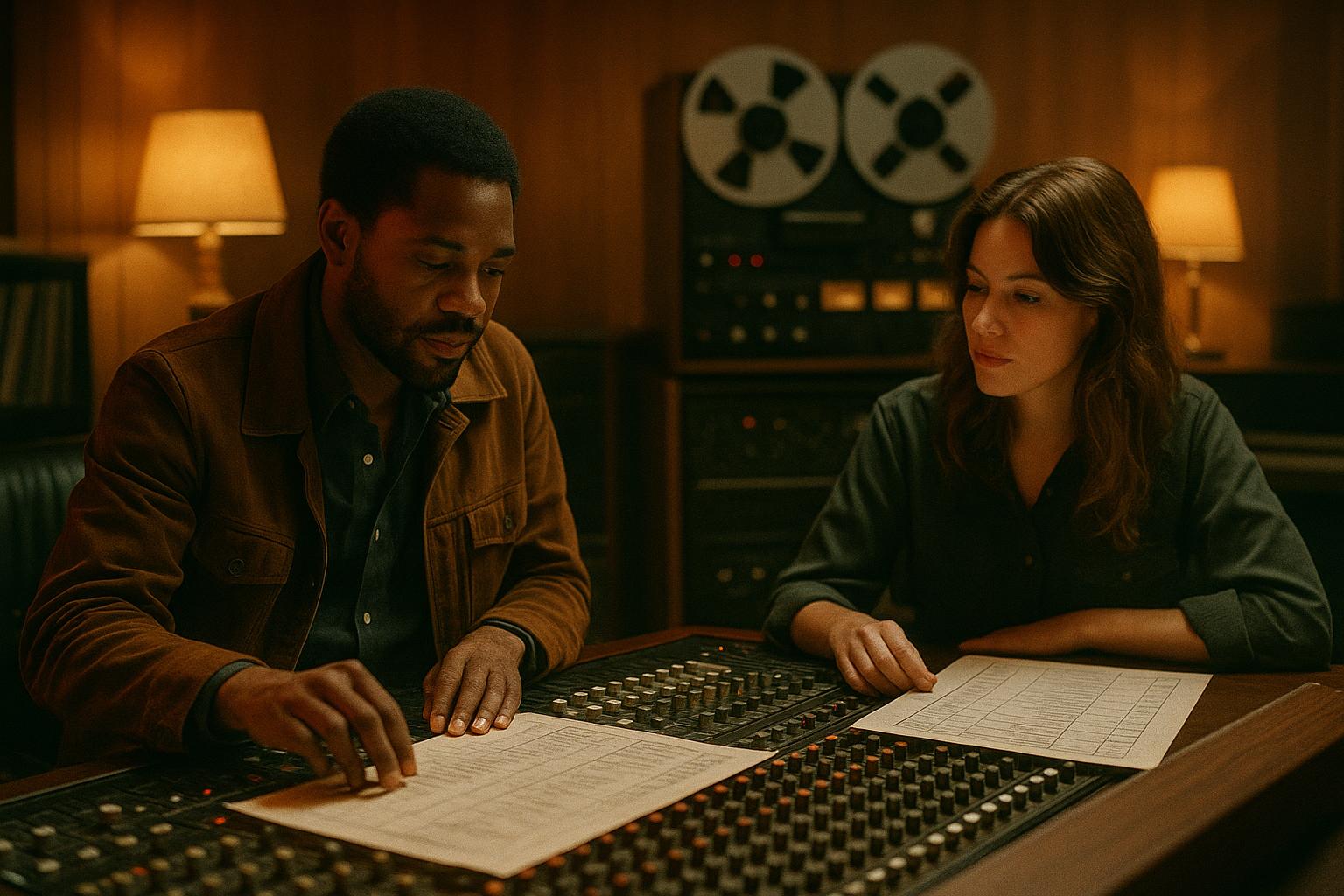
Turn cinematic opportunities into recurring sync revenue with precise music editing, mixing, and mastering
Launching music into film, TV, trailers, and streaming requires more than a compelling melody. It demands disciplined attention to how the music sits in picture, how metadata travels through systems, and how fast you can clear rights and deliver final packages. In practice, mastering music editing mixing and mastering is what separates tracks that barely fit from tracks that repeatedly land placements. This article outlines actionable steps, metadata discipline, and production workflows that help producers, songwriters, sync supervisors, and independent composers build placement-ready catalogs—while positioning One World Media as a trusted partner for publishing, sync, distribution, and catalog development.
Case study: a Los Angeles case study in rapid turnaround from edit to final master
In a recent scenario based in Los Angeles, an independent composer partnered with a producer to place a 30-second cue in a high-profile trailer. They began with an edited version designed to hit a precise scene beat, then moved through a tight mix plan and a two-tier mastering pass to fit streaming loudness norms and traditional broadcast specs. The team prepared two alt cuts (a 30-second and a 60-second variant) and delivered a full stem set (drums, bass, synth, ambience) plus an instrumental version. Crucially, they maintained meticulous metadata from day one—title, credits, ISRC code, and cue sheet references—through a shared project timeline. They also completed a split sheet early, clarifying master and publishing ownership and establishing PRO registrations. The result was a clean clearance path, a fast sign-off from the music supervisor, and a placement that opened doors to future scoring opportunities, creating a predictable revenue stream for the catalog. The case underscores how music editing mixing and mastering workflows, integrated with rights administration and metadata discipline, can yield repeat placements for a growing catalog.
Rights and readiness: split sheets, ownership clarity, and metadata discipline
Before any pitch is made, ensure your catalog is truly ready for a quick clearance cycle. The following checklist helps reduce friction during negotiations and approvals:
- Split sheets and ownership clarity: establish who controls the master, publishing, and any samples or third-party content; secure written licenses where needed.
- Master vs. publishing ownership: document in plain terms who can grant licenses for masters and for compositions; align with any collaborators or featured artists.
- PRO registration: register the proper affiliations (ASCAP/BMI/SESAC or global equivalents) for both the performer and the publisher; ensure track credits match the working titles.
- ISRC/ISWC metadata: include accurate codes and ensure they are tied to the correct release, version, and language; update any changes promptly.
- Cue sheet importance: prepare cue sheet-ready documentation that maps the music to on-screen instances, durations, and timecodes; this supports royalty reporting and future licensing transparency.
The synergy between metadata quality and fast clearance cannot be overstated. When the right metadata accompanies ready-to-license masters, publishers and sync teams move quickly, especially in competitive markets like Los Angeles where gatekeepers expect precision and speed.
For Sync Supervisors: what you need from artists to speed clearances and approvals
Sync supervisors are the gatekeepers who translate music into picture. They value predictability, clear licensing terms, and delivery-ready assets. Consider the following list when you present music to supervisors and their teams:
- High-quality metadata and cataloging: complete credits, accurate show/episode or trailer references, runtime, and version names.
- One-stop clearance or clear license terms: provide licensing options that minimize back-and-forth, including perpetual vs. term licenses and any territory limitations.
- Alternate mixes and stems: ready-to-use 30s/60s edits, instrumental versions, and individual stems (drums, bass, vocal, synth) for on-screen balance and remixing needs.
- Delivery-ready master files and stems: broadcast-safe masters, high-resolution stems, and properly named files that align with the supervisor’s submission specs.
- Fast turnaround: guaranteed response times, a single point of contact, and proactive updates if a brief evolves.
One World Media supports sync supervisors with a proactive sync strategy that aligns music publishing, rights admin, and distribution to maximize placement velocity. Our approach helps ensure all metadata, ownership statements, and deliverables are synchronized with the brief and production timelines, especially in the demanding LA market.
Producer and songwriter collaboration workflows that boost placement success
Clear, efficient collaboration between producers and songwriters is a proven driver of placement stability. The right workflow reduces revisions, accelerates approvals, and strengthens the quality of the final product. Here is a practical collaboration framework you can start using now:
- Define the brief and target shows or trailers: align on mood, tempo, runtime, and any non-negotiables (e.g., no profanity; specific instrumentation).
- Establish licensing terms at the outset: confirm who owns what, who is licensing rights to whom, and whether any samples require separate clearance.
- Develop two production paths: (a) a main track suitable for licensing, (b) an alt edit with shorter cues or different instrumentation for different scenes.
- Set up metadata and rights tasks in parallel: create split sheets, register ISRC/ISWC, and document PRO assignments; maintain a shared ledger accessible to all collaborators.
- Share stems and alt mixes early: use a consistent file-naming convention and version control so edits can be swapped without confusion.
- Implement a fast approval cycle: schedule brief check-ins after each milestone and lock versions with clear approval stamps.
- Plan for picture edits: synchronize tempo, phrasing, and hit points with anticipated edit cuts; build in time to adjust to last-minute changes.
- Deliver a complete package: include master, stems, instrumental, alt mixes, and a metadata-rich cue sheet; verify delivery specs for each target platform.
This workflow emphasizes proactive communication, rigorous version control, and metadata discipline—elements that increase the likelihood of placements and recurring sync revenue. One World Media can help orchestrate this collaboration through our artist development programs, rights administration, and distribution services to ensure every collaboration yields a placement-ready catalog.
Practical workflow: from music editing to final master ready for film, TV, and streaming
Below is a structured, step-by-step process you can apply immediately to move a cue from rough cut to deliverables ready for licensing. Each step reinforces the tight control of music editing mixing and mastering quality and packaging.
- Clarify the brief: confirm the target platform (film, TV, trailer, or streaming), duration, and scene timing; gather any reference tracks.
- Organize the project: label tracks and stems clearly (e.g., Drums_Main, Bass_Sub, Vox_Lead); create a dedicated folder for stems, alternates, and masters.
- Edit to picture: adjust timing to cuts, tighten transitions, and ensure musical cues align with emotional beats without overpowering dialogue.
- Mix for separation and emotion: balance elements so that the music supports dialogue and sound design; apply dynamic range appropriate for the format.
- Prepare alt versions: craft at least a 30-second and 60-second edit; include instrumental and stem-only variants as standard deliverables.
- Master to spec: apply loudness normalization, tonal balance, stereo image, and consistency across versions; ensure compliance with broadcast and streaming targets.
- Metadata and documentation: populate ISRC/ISWC, performer/composer credits, publisher info, and a clear rights statement; prepare cue sheets as applicable.
- Quality control and packaging: perform a final check against delivery specs (format, resolution, naming, and file integrity); assemble the deliverables into a clean package for the supervisor.
Deliverables to track and manage include:
- Master WAV/AIFF files in required sample rate and bit depth
- High-quality stems for each instrument group
- Instrumental or alt mixes
- Complete cue sheet and metadata packet
- Proof of rights and ownership statements
- Contact information for licensing inquiries
Effective management of this workflow ensures you can respond quickly to new briefs and maintain a catalog that newsrooms, trailers, and streaming curators can trust. At One World Media, we streamline these workflows through our rights admin, distribution, and sync strategy services, helping you scale a catalog into a durable revenue engine—especially valuable for creators based in Los Angeles and other music hubs.
FAQ
Q: What is essential metadata for music editing mixing and mastering for film and TV?
A: Essential metadata includes track title, artist/composer credits, publisher and owner information, ISRC and ISWC codes, PRO affiliations, license terms, version names, duration, show/episode reference, and cue sheet identifiers. Accurate metadata speeds licensing, reporting, and royalty collection while reducing clearance delays.
Q: How can artists ensure fast clearance and timely delivery?
A: Build a package with ready-to-license terms (one-stop or clearly defined licenses), alt mixes and stems, and a metadata-rich master. Use pre-cleared samples where possible, and maintain a single, responsive contact for license inquiries. Regular, proactive communication with the supervising team also accelerates decisions.
Q: What collaboration workflows increase placement success?
A: Start with a clear brief, establish ownership and licensing terms early, version-control all edits, share stems and alternates promptly, and maintain fixed deadlines for approvals. Align timelines with production schedules and track all deliverables against a living rights and metadata checklist.
Q: What should sync supervisors expect from a publisher or rights admin partner?
A: They should expect consistent, license-ready packages with accurate credits and metadata, efficient clearance processes (including one-stop options), ready-to-use stems and alt mixes, prompt delivery of final masters, and reliable communication on any licensing constraints or changes.
Contact One World Media
For more information, please contact us at support@oneworldmedia.global or call (307) 200-8139.